

Gentle infant moisturizer for newborns and sensitive skin
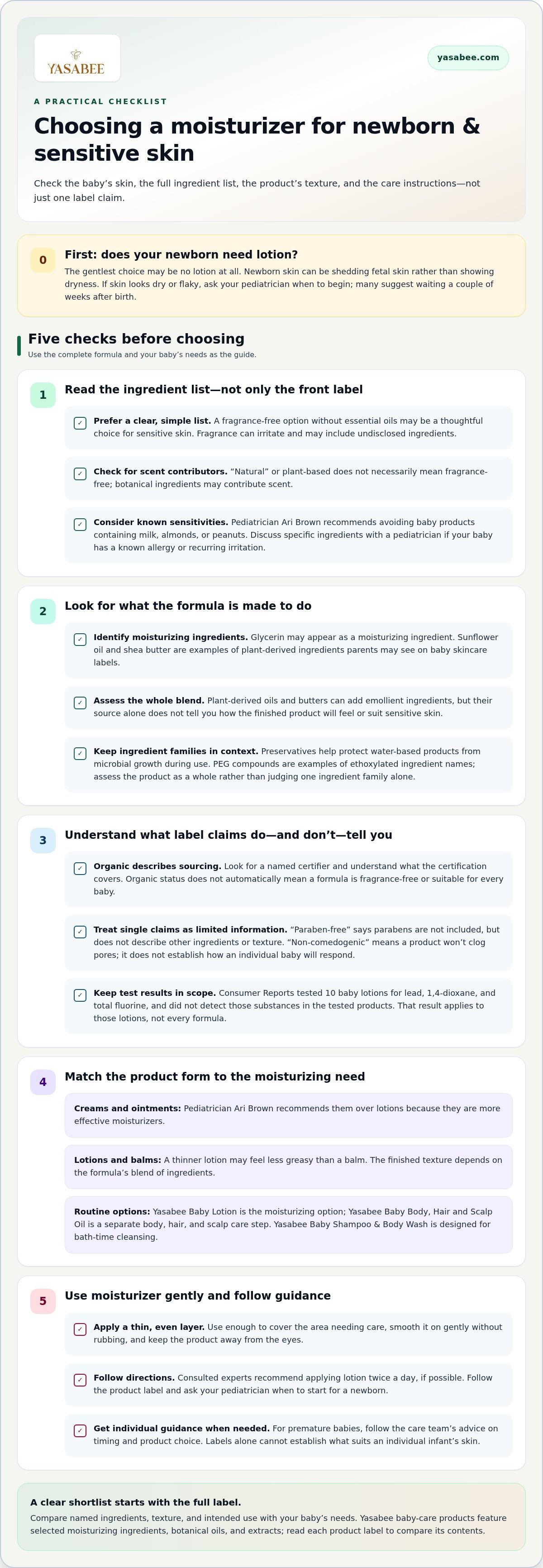
The gentlest choice for a newborn may be no lotion at all. If your baby’s skin looks dry or flaky, choose a gentle infant moisturizer with simple moisturizing ingredients, no fragrance, and no essential oils. Ask your pediatrician when to begin, as many suggest waiting a couple of weeks after birth. Newborn skin may be shedding fetal skin rather than showing dryness.
It’s natural to want every ingredient to feel as considered as the care you give your baby. Fragrance can irritate delicate skin and may include undisclosed ingredients, so a shorter, clear ingredient list can make choosing easier. This guide explains what to look for in moisturizers for newborns and sensitive skin, how to assess plant-based and organic options, and when a cream or ointment may suit better than lotion.
Key Takeaways
- Consider whether a cream or ointment may suit your baby’s moisturizing needs better than a lighter lotion.
- Look beyond “plant-based” on the label and assess the specific moisturizing ingredients, botanical oils, and extracts.
- Use organic status as one selection factor, and read the full ingredient list; non-comedogenic means a product won’t clog pores.
- Explore Yasabee Baby Lotion and Yasabee Baby Body, Hair and Scalp Oil as distinct options for a baby-care routine.
What is the best baby lotion for newborns and sensitive skin?
A gentle infant moisturizer should have simple moisturizing ingredients and no fragrance or essential oils. Newborns may not need lotion at first, since their skin can be shedding fetal skin rather than showing dryness.
Organic Options for Delicate Skin
Organic describes how ingredients are sourced, but it doesn’t automatically mean a formula is fragrance-free or suitable for every baby. Read the ingredient list and look for a fragrance-free option without essential oils. A lightweight texture may feel different from a cream or ointment, so consider the product’s form as well as its label. For a newborn with dry or flaky skin, ask the pediatrician when to begin. Some suggest waiting a couple of weeks after birth.
Fragrance-Free and Paraben-Free Formulas
Fragrance-free baby lotion can be a thoughtful choice for sensitive skin because fragrance may irritate and can include undisclosed ingredients. A paraben-free label tells you parabens aren’t included, but says nothing about the formula’s other ingredients or texture. Check the full label rather than relying on one claim. When moisturizer is appropriate, consulted experts recommend applying lotion twice a day, if possible. Pediatrician Ari Brown recommends creams and ointments over lotions because they’re more effective moisturizers.
Fragrance and Potential Allergens
“Natural” doesn’t necessarily mean fragrance-free: botanical ingredients may still contribute scent. Read the ingredient list and avoid products containing fragrance if you’re trying to reduce potential irritants. Pediatrician Ari Brown also recommends avoiding baby products containing milk, almonds, or peanuts. For newborns, ask the pediatrician when to start lotion; for premature babies, follow their care team’s guidance on timing and product choice. A product label alone can’t establish what suits an individual infant’s skin.
Plant-based moisturizing ingredients
Plant-derived oils and butters can soften dry-feeling skin by adding emollient ingredients to a formula. Sunflower oil and shea butter are examples parents may see on baby skincare labels. Their source alone doesn’t establish how a product will feel or suit sensitive skin, so read the full ingredient list and consider the formula’s texture.
A thinner lotion may feel less greasy than a balm, while the finished formula depends on its blend of ingredients. Look for clearly named ingredients and a moisturizing purpose, rather than treating “plant-based” as a complete description. For babies with a known allergy or recurring irritation, discuss specific ingredients with a pediatrician.
Preservatives have a practical role in water-based products: they help protect the formula from microbial growth during use. Their presence alone doesn’t mean a product is unsuitable. Ethoxylated ingredients may appear under names such as PEG compounds; check the full label and assess the product as a whole, rather than judging one ingredient family without context.
Environmental considerations also include how plant ingredients are sourced and how the product is packaged. Organic labeling may describe agricultural sourcing, but it doesn’t explain every ingredient or the packaging’s impact. Consumer Reports tested 10 baby lotions for lead, 1,4-dioxane, and total fluorine, and didn’t detect those substances in any tested product. That result applies to those tested lotions, not every formula. Parents can compare labels, choose a texture that suits their routine, and ask a pediatrician about ingredients linked to a baby’s known sensitivities.
Selection criteria for organic baby moisturizers
Organic labeling can describe how ingredients are grown, but it doesn’t tell you whether a formula suits delicate skin. Look for a named certifier and understand what the certification covers. Then read the complete ingredient list: an ingredient’s source and the finished product’s formula are separate considerations.
Pediatrician Ari Brown recommends avoiding baby products containing milk, almonds, or peanuts. She also recommends creams and ointments over lotions for moisturizing. Check for a clear ingredient list and a texture that fits your baby’s skin and your routine. “Non-comedogenic” means a product won’t clog pores, though that claim alone doesn’t establish how an individual baby will respond.
Apply enough moisturizer to leave a thin, even layer over the area needing care. Smooth it on gently without rubbing delicate skin; the amount depends on the size of the area and the product’s texture. Follow the label directions and keep the product away from your baby’s eyes.
Labels such as “hypoallergenic” and “tested” can offer context, but they don’t replace ingredient review. For example, glycerin may appear as a moisturizing ingredient; consider it alongside the complete formula, not as a guarantee of suitability. Baby shampoo and moisturizer serve different roles, so choose each product for its intended use.
For a considered addition to your baby’s bath-time routine, explore gentle baby care.
Yasabee: Yasabee Luxury Baby Gift Collection
Yasabee Luxury Baby Gift Collection brings baby-care essentials together for a new arrival. For everyday moisturizing, Yasabee Baby Lotion is the relevant option; Yasabee Baby Body, Hair and Scalp Oil offers a separate step for body, hair, and scalp care. Yasabee Baby Shampoo & Body Wash is designed for bath-time cleansing.
Yasabee’s baby-care range includes selected moisturizing ingredients, botanical oils, and extracts. Since ingredient preferences can vary, read each product label and compare its contents with your baby’s needs and sensitivities. This can help you choose what fits your routine, whether you’re preparing a gift or selecting an individual care product.
Visit yasabee.com to explore Yasabee’s baby-care offerings.
Shape a routine that feels right for your family
Choosing a gentle infant moisturizer is one part of creating a calm, manageable routine. Let the ingredient label guide your shortlist, then keep other care habits familiar as you introduce a new product. A simple approach makes it easier to notice which textures and ingredients suit your preferences without turning everyday care into a complicated checklist.
Keep a brief note of the product, where you used it, and how your baby’s skin looks afterward. That record can help you describe your observations clearly if questions arise. As your baby grows, revisit the routine and adjust it to fit your family’s needs. For a thoughtful next step, explore Yasabee’s baby-care offerings and choose what feels right for your home.
Frequently Asked Questions
Do Babies Need Special Lotion?
Not every baby needs lotion, and newborn skin can shed naturally during its early adjustment. If you’re considering a product for a newborn, ask the pediatrician when to start, especially if your baby was premature or has a skin condition. Choose a formula intended for babies and introduce it as directed rather than adding several new products to the routine at once.
Does the lotion have a fragrance?
Yasabee Baby Lotion is listed as fragrance-free. Yasabee Baby Shampoo & Body Wash and Yasabee Baby Body, Hair and Scalp Oil are also listed as fragrance-free, but don’t assume that feature applies to every product. Yasabee products are suitable for newborns when used as directed. Always follow the directions on each product label and discontinue use if irritation occurs.
What should I use on my baby's extra dry or rough patches?
For a small rough patch, a cream or ointment may moisturize more effectively than a lightweight lotion. Apply a thin layer to clean skin and observe how the area responds. Don’t treat a persistent, spreading, cracked, or uncomfortable patch as ordinary dryness; a pediatrician can assess whether it needs specific care rather than another skincare product.
What ingredients should a gentle moisturizer for infants contain?
Look for clearly named moisturizing ingredients, such as glycerin, alongside emollients that soften skin. The right choice depends on your baby’s needs and the complete formula, not a single highlighted ingredient. If your baby has known allergies, compare the label against those triggers. A short ingredient list can make review easier, but it doesn’t replace checking each ingredient.
Which moisturizer ingredients should be avoided for babies with sensitive skin?
For sensitive skin, consider avoiding fragrance and essential oils, which may irritate delicate skin. Pediatrician Ari Brown also recommends avoiding baby products containing milk, almonds, or peanuts. Check the complete label for ingredients relevant to your baby’s known allergies, including botanical extracts. If irritation appears after introducing a product, stop using it and discuss the reaction with your pediatrician.