

Choosing Organic Moisturizer for Peeling Newborn Skin
Peeling is one change newborn skin may show, particularly on the wrists, hands, ankles, and feet. An organic baby moisturizer may be part of gentle care for dry-feeling areas, but peeling alone doesn’t mean your baby needs a product or that moisturizer will stop natural skin changes.
It’s understandable to want every ingredient touching your newborn’s skin to feel gentle and considered. A thoughtful choice looks beyond the word “organic” to what a formula contains and what it’s designed to do.
Here, you’ll learn what newborn skin may look like, why it can peel, and how moisturizing ingredients, botanical oils, and extracts can fit into skin care. You’ll also find practical points to consider when choosing a moisturizer for your baby’s delicate skin.
Key Takeaways
- Look beyond an “organic” label and assess the ingredients and purpose of a moisturizer for your newborn’s skin.
- Consider how your baby’s individual skin responds, since a product’s label alone can’t establish that it suits every newborn.
- Compare lotions, creams, and ointments by their texture and intended role to better match the product to your skin-care needs.
- Explore Yasabee Baby Lotion as one option when considering baby-care products for moisturizing.
What ingredients should I look for in an organic baby moisturizer?
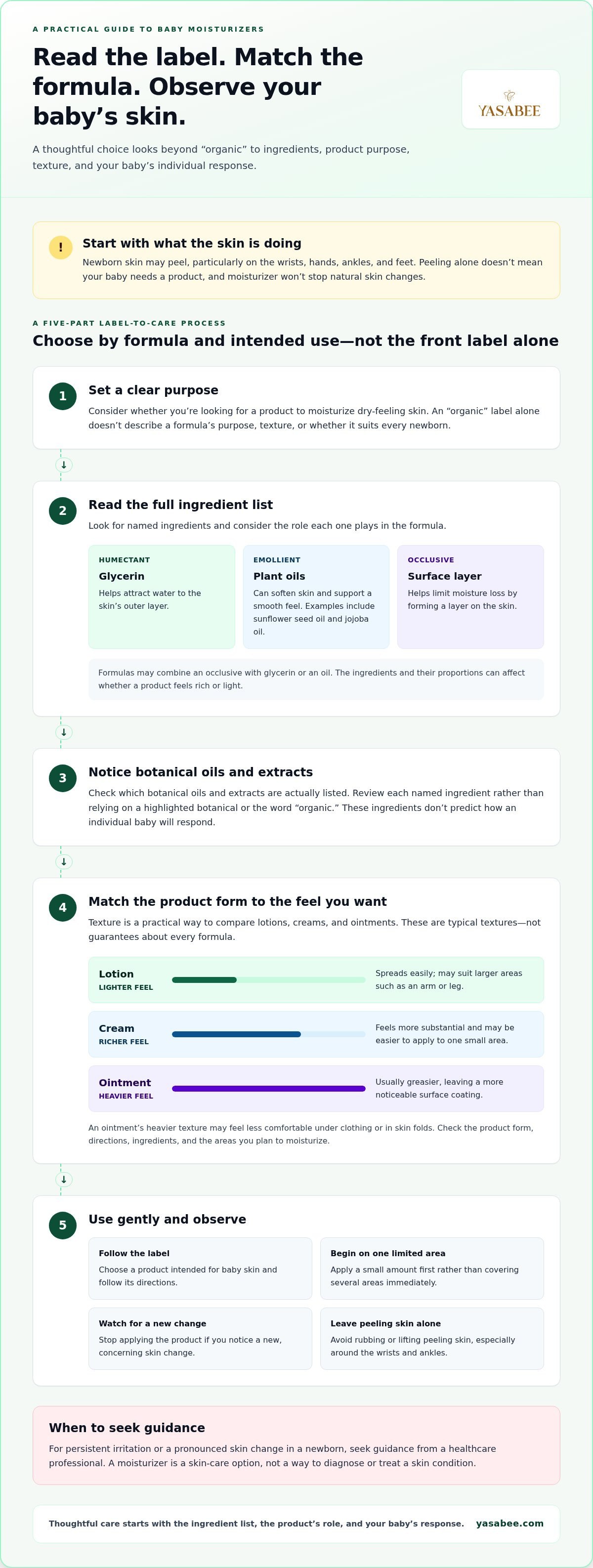
An organic baby moisturizer deserves a closer look than its front label alone. Newborn skin may peel, particularly on the wrists, hands, ankles, and feet. A clear ingredient list helps you identify moisturizing ingredients, botanical oils, and extracts. “Organic” alone doesn’t describe a formula’s texture or purpose.
Look for humectants such as glycerin, which help attract water to the skin’s outer layer. Then consider emollients, which soften skin and support a smooth feel. Plant oils can act as emollients, but the specific oil matters. For example, a label may list sunflower seed oil or jojoba oil. These examples don’t predict how an individual baby will respond.
Some formulas also use occlusive ingredients, which help limit moisture loss by forming a surface layer. A moisturizer may combine an occlusive with glycerin or an oil, affecting whether the product feels rich or light. Read the full ingredient list, not only the botanical ingredient highlighted on the package.
Use this label-reading approach:
- Identify moisturizing ingredients, such as glycerin or a named plant oil.
- Notice whether botanical extracts appear alongside those ingredients.
- Consider whether the product’s texture suits the area and your routine.
- Look for ingredient names you can recognize and assess.
For newborn care, consider whether an organic baby moisturizer has a clear purpose, such as moisturizing dry-feeling skin. Ingredient names and their roles offer more useful guidance than an organic claim alone.
Are organic baby moisturizers safe for newborns and sensitive skin?
An “organic” label alone can’t show whether a moisturizer suits a particular newborn. Check the full ingredient list and intended use rather than treating the label as a safety guarantee. Botanical oils, extracts, and other ingredients matter when considering how a formula may feel on delicate skin.
Newborns may have peeling skin, particularly on their wrists, hands, ankles, and feet. Some are also born with vernix caseosa, which is hypothesized to act as an antibacterial barrier. These details help explain natural skin changes in the first days, but they don’t mean every peeling area needs moisturizer.
Use the product label as a practical guide. Review each named ingredient and consider whether your baby has reacted to any of them before. If a formula lists several botanical extracts, for example, look at each one rather than focusing only on its organic description. A shorter, understandable ingredient list can make this review easier.
- Choose a product intended for baby skin, and follow its label directions.
- Apply a small amount to one limited area first, rather than covering several areas immediately.
- Observe the skin after use; stop applying the product if you notice a new, concerning change.
- Avoid rubbing or lifting peeling skin, especially around the wrists and ankles.
For persistent irritation or a pronounced skin change in a newborn, seek guidance from a healthcare professional. An organic baby moisturizer is a skin-care option, not a way to diagnose or treat a skin condition.
Natural botanical oils and extracts may cause a reaction. Consider whether your baby has reacted to any listed ingredients before, test a small amount on one limited area, and stop using it if you notice a new, concerning skin change.
How do organic baby lotions, creams, and ointments compare?
Texture is a practical way to compare three moisturizer forms. Lotions are generally lighter and spread easily across larger areas. Creams feel richer, while ointments are usually greasier and leave a more noticeable surface layer. These are typical textures, not guarantees about every formula.
A lotion may suit a caregiver who prefers a light feel for everyday skin care. A cream can feel more substantial on a small area. An ointment’s heavier texture may feel less comfortable under clothing or in skin folds. The label’s directions and your baby’s response can help guide your choice.
- Lotion: A lighter consistency that spreads readily, such as over an arm or leg.
- Cream: A thicker feel that may be easier to apply to one small area.
- Ointment: A richer, often greasier texture that leaves a more noticeable coating.
“Organic” doesn’t determine whether a moisturizer is a lotion, cream, or ointment. Check the stated product form, directions, and ingredient list. Two lotions may feel different because their formulas use different ingredients and proportions. Compare the texture you prefer with the areas you plan to moisturize.
As you weigh texture and intended use, you can also explore Yasabee’s baby-care offerings as part of your comparison. Choose according to the label and the role you want the product to play in your routine. The form describes how a moisturizer feels and applies; it doesn’t, by itself, determine whether it suits your baby.
Yasabee: Yasabee Luxury Baby Gift Collection
Yasabee Luxury Baby Gift Collection brings together baby-care choices for a new arrival. Yasabee Baby Lotion is the lotion option, while Yasabee Baby Shampoo & Body Wash is for bathing. Their names indicate their forms and intended roles in a care routine.
Yasabee’s baby-care range includes products with moisturizing ingredients, botanical oils, and extracts. Read each product label for its ingredients and directions to see how it fits your routine. Consider the formula and purpose of each product rather than assuming every item serves the same role.
For a closer look at the collection and baby-care products, visit yasabee.com.
Choose a Thoughtful Next Step for Your Baby’s Skin
Newborn care grows through small, attentive choices, not a crowded shelf. As you decide whether an organic baby moisturizer fits your routine, consider your baby’s needs and the product’s stated purpose. A simple approach can make everyday care feel more deliberate.
Before choosing an organic baby moisturizer, consider how it fits your routine, how it feels to apply, and whether its directions suit your preferences. This pause can help you focus on function rather than packaging language alone.
If you’d like to explore your options further, contact Yasabee for help. Take your time, and let each choice support a gentler, more intentional start to your baby’s care.
Frequently Asked Questions
What are the risks of allergic reactions to natural baby moisturizer ingredients?
Natural botanical oils and extracts may cause a reaction. Consider ingredients your baby has reacted to before, test a small amount on one limited area, and stop using the product if you notice a new, concerning skin change.
How much does organic baby moisturizer cost, and where can I buy it?
Yasabee Baby Lotion is one option in the Yasabee Luxury Baby Gift Collection. You can contact Yasabee for help exploring its baby-care products.