

Baby Lotion for Newborn Skin: Which Formula Should You Choose
The best lotion for newborn skin may be no lotion at all during the first four weeks after birth. After that, if your baby has dry skin or rough patches, choose a fragrance-free moisturizer; a cream or ointment may suit stubborn dryness better than a thin lotion. Gentle care matters more than a long ingredient list.
It’s natural to want to soothe delicate skin and feel confident about what touches it. This guide explains when newborns may benefit from moisturizing, how to weigh ingredient concerns, and what to look for in a formula. You’ll also compare lotions with richer options and learn which qualities can help you make a calm, considered choice for your baby.
Key Takeaways
- Newborn skin may not need lotion right away; look for signs of dryness before adding a moisturizer to your routine.
- When choosing a formula, prioritize fragrance-free options and consider whether a richer cream or ointment may suit dry patches better than a thin lotion.
- Compare lotions by texture and intended use, and weigh ingredient concerns in context rather than judging an ingredient by name alone.
- For a baby-care gift or a lotion option to explore, consider Yasabee Baby Lotion or the Yasabee Luxury Baby Gift Collection.
Why Use a Baby Lotion?
Newborn skin can lose moisture more readily than adult skin, but lotion isn’t automatically necessary. The right choice depends on dryness, skin sensitivity, and your baby’s age.
Daily Moisturizing Needs
Newborns generally don’t need lotion during their first four weeks after birth. For babies with dry skin or rough patches, moisturizing twice daily can help; pediatrician Ari Brown recommends creams or ointments over thinner lotions. For eczema-prone skin, a fragrance-free moisturizer may support comfort. Persistent or worsening irritation calls for pediatric guidance.
Newborn Skin Barrier Support
A baby’s outer skin layer is thinner than an adult’s and regulates moisture less effectively, according to chemical engineer Birnur Aral. A strong protective barrier can take two years to develop. Sensitive skin may respond better to products without dyes or fragrances, but “hypoallergenic” on a label doesn’t guarantee every baby will tolerate a formula.
Apply a small amount with clean hands, gently smoothing it over dry areas rather than rubbing. Avoid the eyes and mouth, and stop using the product if irritation appears. An ingredient’s safety depends partly on dose, exposure route, and individual susceptibility, according to Environmental Health Perspectives.
For diaper rash, petroleum jelly can create a barrier against moisture. Ask a pediatrician about persistent, spreading, or uncomfortable skin changes, or before treating a suspected skin condition.
| Option | Best suited to | Texture |
|---|---|---|
| Lotion | Light everyday moisturizing | Thin |
| Cream or ointment | Dry or eczema-prone skin | Richer |
| Petroleum jelly | Protecting diaper-area skin | Occlusive |
Recommended lotions are sold through pharmacies and baby-care retailers; costs vary by product and seller. Choose according to your baby’s skin needs and the formula’s texture.
Recommended baby lotions and ingredient-risk categories
Choose a baby lotion by considering its moisturizing role, fragrance, and formula. For newborns, a shorter ingredient list can make label comparisons clearer.
Helpful Ingredients for Dry Skin
Petrolatum is an occlusive ingredient that helps limit moisture loss from skin. It can reduce transepidermal water loss by up to 98 percent. That makes it a useful ingredient to recognize in products for dry areas. For eczema-prone skin, focus on formulas designed to moisturize, rather than assuming botanical ingredients alone will soothe irritation.
Fragrance and Undisclosed Ingredients
Fragrance can be a concern because its ingredients may not be individually disclosed on the label and may irritate sensitive skin. Fragrance-free formulas are recommended for babies, and options without dyes can be a thoughtful starting point. Don’t take a pleasant scent as evidence that a product suits delicate skin.
Gentle Formula Properties
Look for a clearly labeled fragrance-free formula and review its ingredient list before use. Creams, ointments, and lotions each have a different texture and moisturizing feel. “Hypoallergenic” is a label description, not a guarantee that every baby will tolerate a product. Consider how the formula feels and whether it suits your baby’s level of dryness.
Allergic Reactions and Irritation
Newborn lotion can cause irritation or an allergic reaction in some babies. An ingredient’s safety depends partly on dose, exposure route, and individual biological susceptibility, according to Environmental Health Perspectives. If redness or a rash appears after application, stop using the product and note its ingredients. Seek pediatric guidance for persistent or worsening symptoms, including irritation near diaper rash.
Best lotion options for newborns
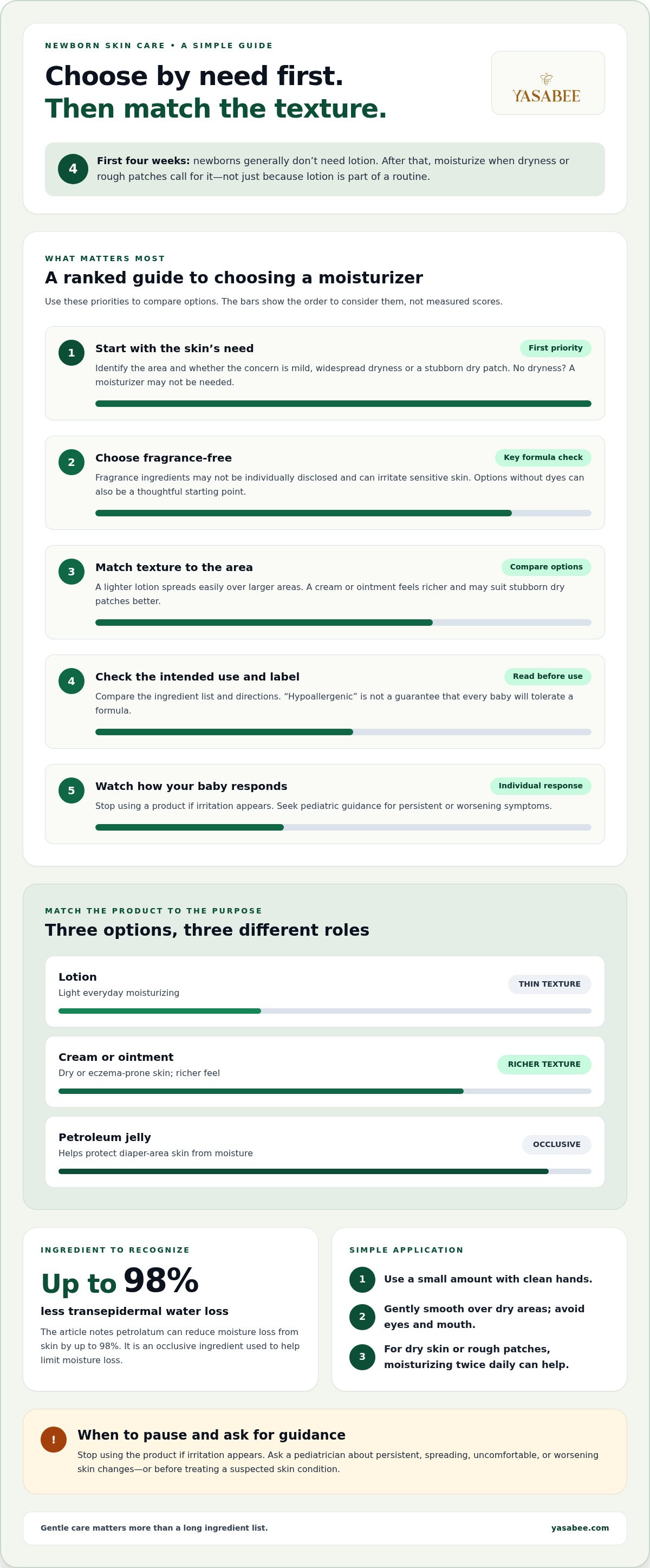
The best lotion for newborn skin depends on the area and type of dryness you’re addressing. In the United States, consider fragrance-free baby lotion for mild, widespread dryness; for stubborn dry patches, a richer cream or ointment may be a better fit. Check the label for intended use and ingredients.
For daily moisturizing, lotion has a lighter texture that spreads easily over larger areas. Creams and ointments feel richer, so they may suit isolated rough patches. Pediatrician Ari Brown recommends creams and ointments over lotions for moisturizing a baby’s skin. Match the texture to the need rather than choosing by package appeal.
Petrolatum-based products serve a different purpose. They help reduce moisture loss and can create a protective layer against dampness in the diaper area. This makes them an option to consider for diaper rash, rather than a general body lotion. Keep the product’s intended use in mind.
Baby oil is best used for massage, not as a newborn moisturizer, because newborn skin doesn’t absorb it well. A fragrance-free label can help narrow your choices, since fragrance ingredients may be undisclosed and can irritate sensitive skin. “Hypoallergenic” doesn’t guarantee every baby will tolerate a formula.
To choose the best lotion for newborn skin, start with the area you want to moisturize, then compare fragrance, texture, and intended use. This simple process can help you distinguish a light lotion from richer or more protective options.
Explore baby lotion options as you compare formulas and textures for your baby’s routine.
For mild, widespread dryness, choose a fragrance-free baby lotion labeled for its intended use. For stubborn dry patches, a richer cream or ointment may be a better fit. A pediatrician recommends creams and ointments over lotions for moisturizing newborn skin.
Yasabee: Yasabee Luxury Baby Gift Collection
Yasabee Luxury Baby Gift Collection brings together baby-care options for families choosing a thoughtful gift or building a gentle routine. Yasabee Baby Lotion is the relevant choice when you’re considering a moisturizer; its role is to moisturize baby skin. The collection also includes Yasabee Baby Shampoo & Body Wash and Yasabee Baby Body, Hair and Scalp Oil.
Yasabee Baby Shampoo & Wash, Body Lotion, and Body Oil have gentle, fragrance-free formulas designed for delicate and sensitive skin. Read the lotion’s ingredient label and follow its directions, especially if your baby has sensitive skin. Always follow the directions on each product label and discontinue use if irritation occurs.
Explore Yasabee’s baby-care offerings for a considered addition to your newborn routine. Visit yasabee.com to learn more.
Choose a Gentle Next Step for Your Baby
As your baby’s skin changes, let its current needs guide your routine. Choosing the best lotion for newborn skin is less about finding a universal favorite and more about selecting a formula that fits your family’s approach to moisturizing. Read the ingredient label, introduce care thoughtfully, and adjust if your baby’s skin reacts.
Yasabee Baby Lotion is an option to consider alongside Yasabee Baby Shampoo & Body Wash for bathing and the Yasabee Luxury Baby Gift Collection for a thoughtful present. Each has a distinct place in a baby-care routine, so choose according to what would be useful to your family now.
For a closer look at these baby-care offerings, contact Yasabee for help. A considered routine can begin with one gentle, practical choice.
Frequently Asked Questions
Do Babies Need Special Lotion?
Not every baby needs lotion, and newborns generally don’t need it during their first four weeks after birth. If dryness develops later, choose a product intended for baby skin and follow its label directions. For example, compare a fragrance-free baby formula with a scented adult moisturizer rather than assuming the two are interchangeable.
So, what lotion SHOULD you choose?
Choose a fragrance-free baby lotion for mild dryness, then compare the ingredient list and texture with your baby’s needs. A cream or ointment may suit stubborn dry areas better than a thin lotion. If a product causes visible irritation, stop using it and note the formula so you can avoid repeating the same exposure.
Why is using a lotion every day so important?
Daily lotion isn’t essential for every baby; moisturizing is most useful when skin feels dry or rough. For babies with dry patches, moisturizing twice daily can help. Focus on affected areas instead of applying product automatically to comfortable skin. This practical approach also makes it easier to notice whether a formula agrees with your baby.
What ingredients should parents look for in newborn lotion?
Petrolatum is an ingredient to recognize in a moisturizer, especially when the goal is to help reduce moisture loss. Check the full label, not just the product name or front-panel claims. When comparing formulas, note whether either contains fragrance or dyes, then choose according to your baby’s skin needs and the product’s intended use.
Which lotion ingredients should be avoided for newborns?
For newborns, avoiding fragrance is a reasonable choice because it may irritate sensitive skin, and fragrance components may not be individually disclosed. Dyes are another category parents may choose to avoid. An ingredient isn’t automatically harmful simply because it sounds unfamiliar; consider the whole formula, its intended use, and your baby’s response. Always follow the directions on each product label and discontinue use if irritation occurs.