

Baby Hair Brush: How to Choose a Gentle Brush for Your Baby
The right baby hair brush is one that suits your baby’s hair and feels easy to guide with a light touch. If you’re unsure whether a brush will feel comfortable against a delicate scalp, start by looking at practical details such as the bristles, brush shape and handle. A thoughtful choice depends on fit and gentle use, not sweeping product claims.
This guide explains what a baby hair brush can and can’t do, what to consider for your baby’s hair, and how to use and care for a brush. It also covers coordinated grooming tools, including the Yasabee Wooden Brush & Comb Set. By the end, you’ll have practical criteria to help you choose and use a brush comfortably.
Key Takeaways
- A baby hair brush is for grooming, not treating scalp conditions, and babies don’t need to be brushed on a set schedule.
- Consider your baby’s hair, the brush’s shape and bristle feel, and whether the handle is comfortable to hold.
- Settle your baby, use light strokes, and pause if they seem uncomfortable.
- Follow the brush’s care instructions, since cleaning depends on how it’s made. The Yasabee Wooden Brush & Comb Set brings two grooming tools together.
What Is a Baby Hair Brush For, and What Should Parents Expect?
A baby hair brush is a grooming tool for arranging hair, not a treatment for a scalp condition. Its purpose is simple: to smooth or neaten hair without pressing, scraping or pulling at the scalp. A brush can’t diagnose or resolve a skin concern. If you’re worried about your baby’s scalp, seek guidance from a healthcare professional rather than relying on brushing.
Babies’ hair varies in amount, length and texture, and it can change over time. Some babies have fine hair, while others have thicker or curlier strands. There’s no single brushing routine every baby needs. As types of hair brushes differ in shape and materials, focus on how a brush feels in your hand and works with your baby’s hair, rather than on promises to treat the scalp.
When does brushing help with everyday baby hair care?
A baby hair brush can help smooth hair that looks tousled after sleep or neaten it after washing. Treat brushing as a brief grooming moment, not a task to complete on a schedule. If there’s little hair to arrange, you may not need to brush at all.
Choose a calm moment, support your baby comfortably, and make a few gentle strokes in the direction the hair naturally lies. Keep your hand relaxed. There’s no need to press down or brush the same area repeatedly. Pause if your baby turns away, fusses or seems uncomfortable. Avoid brushing irritated or unsettled skin as though brushing could remedy it. The Yasabee Wooden Brush & Comb Set offers a coordinated option for everyday grooming.
How to Choose a Baby Hair Brush for Your Baby’s Hair and Scalp
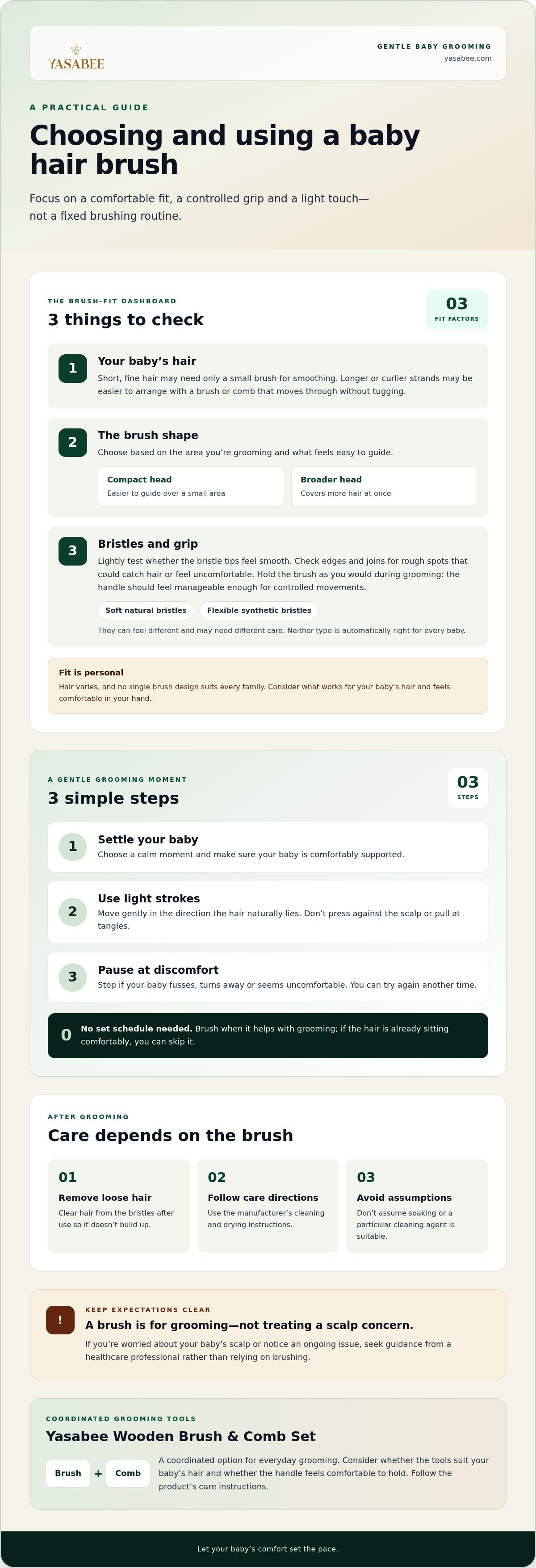
Start with your baby’s hair and your comfort using the brush. Short, fine hair may need only a small brush for smoothing. Longer or curlier strands may be easier to arrange with a brush or comb that moves through the hair without tugging. These are practical considerations, not rules: hair varies, and no single design suits every family.
Consider the brush shape as well as the bristles. A compact head can be easier to guide over a small area, while a broader head can cover more hair at once. Hold the handle as you would during grooming. It should feel manageable in your grip so you can keep your movements controlled instead of pressing harder to compensate for an awkward hold.
Which brush details are worth checking before you choose?
Check whether the bristle tips feel smooth when lightly tested with a fingertip. Look over the brush’s edges and joins for rough spots or anything that could catch hair or feel uncomfortable. Soft natural bristles and flexible synthetic bristles can feel different and may need different care. Neither type is automatically the right choice for every baby.
Use these checks to compare grooming tools based on what matters to your household. The Yasabee Wooden Brush & Comb Set brings a brush and comb together in one coordinated option. When comparing any wooden baby brush and comb set, consider whether the handle feels comfortable to hold and whether the tools suit your baby’s hair and your grooming routine. You can also explore the Yasabee Wooden Brush & Comb Set.
How to Use and Care for a Baby Hair Brush Gently
A calm moment and a light touch can make brushing feel like quiet grooming rather than a chore. Keep the session brief and let your baby’s comfort guide you:
- Settle your baby. Choose a moment when they’re calm and comfortably supported.
- Use light strokes. Guide the brush gently through the hair without pressing it against the scalp or pulling at tangles.
- Pause if discomfort appears. Stop if your baby fusses, turns away or seems uncomfortable. You can try again another time.
There’s no need to keep brushing if the hair is already sitting comfortably. A brush is for grooming, not treating a persistent scalp concern. If you’re concerned about a change or ongoing issue with your baby’s scalp, seek professional guidance instead of trying to resolve it through brushing.
How can parents keep a baby hair brush clean?
After use, remove loose hair from the bristles so it doesn’t build up between grooming sessions. Then follow the manufacturer’s cleaning and drying directions. Care needs depend on how a brush is made, so don’t assume that soaking it or using a particular cleaning agent is suitable. If the instructions explain how to dry or store it, follow those steps before using the brush again.
The Yasabee Wooden Brush & Comb Set is a coordinated option for baby grooming. Follow the product’s care instructions when cleaning the brush and comb. Keeping care specific to the tool helps you avoid relying on a one-size-fits-all routine.
Make Gentle Grooming Part of Your Own Rhythm
Let your baby’s comfort set the pace. A grooming routine doesn’t need to be elaborate or perfectly timed; it can be a quiet moment that fits naturally into your day. As your baby’s hair changes, adjust what feels useful and keep the experience relaxed.
Choosing a baby hair brush is one small way to make everyday care feel considered. If a coordinated grooming set suits your family, explore the Yasabee Wooden Brush & Comb Set. Yasabee’s baby-care collection also includes products for other parts of a baby’s routine.
Take your time, use a gentle touch and let your baby’s comfort lead. Explore the Yasabee Wooden Brush & Comb Set for a coordinated grooming option.
Frequently Asked Questions
How often should you brush a baby's hair?
Brush when it helps with grooming; there’s no set schedule every baby needs. If your baby wakes with hair lying comfortably, you can skip brushing. If a small section is tousled, a few gentle strokes may be enough. Let your baby’s comfort and hair’s needs guide how often you reach for the brush.
Can you use a baby hair brush on wet hair?
You can groom hair after washing, but take care not to pull or force the brush through damp strands. Start with a small section and stop if it catches or your baby reacts. Follow the brush’s care instructions for use around water. A wide-tooth comb may be easier for working through longer, damp hair.
How do you clean a baby hair brush?
Remove trapped hair after use, then clean and dry the brush according to its manufacturer’s directions. A brush with a wooden handle may need different care from one made entirely of another material, so don’t assume it should be soaked. Store it only when it’s dry, and avoid sharing it between children.
Can a baby hair brush remove cradle cap?
No. A baby hair brush isn’t a cradle cap treatment, and brushing shouldn’t involve scraping, picking or trying to lift attached flakes. If loose flakes come away during ordinary gentle grooming, don’t press on or repeatedly brush the area. For persistent scalp concerns or uncertainty about care, seek advice from a healthcare professional.